[2323] O Plant-based Ton That Dam
Completion Year: 2024
Category: Architecture, Furniture
Gross Built Area (m2): 160m2
Project Location: Ton That Dam, Nguyen Thai Binh, Dist.1, HCMC, Vietnam
Usage: F&B
Construction: Local craftsman
Furniture: Mr.Viet, Mr.Trung, Mr.Hao
Design team: Lam Bao, Nguyen Anh Dung, khongphainhan, Trong Nhan, Devon, Kim Nhat Thanh, Nai, Chau Thao Vy
Drawings: Devon
Photography: xuong xep
Category: Architecture, Furniture
Gross Built Area (m2): 160m2
Project Location: Ton That Dam, Nguyen Thai Binh, Dist.1, HCMC, Vietnam
Usage: F&B
Construction: Local craftsman
Furniture: Mr.Viet, Mr.Trung, Mr.Hao
Design team: Lam Bao, Nguyen Anh Dung, khongphainhan, Trong Nhan, Devon, Kim Nhat Thanh, Nai, Chau Thao Vy
Drawings: Devon
Photography: xuong xep
[press & publish]
[ENG]
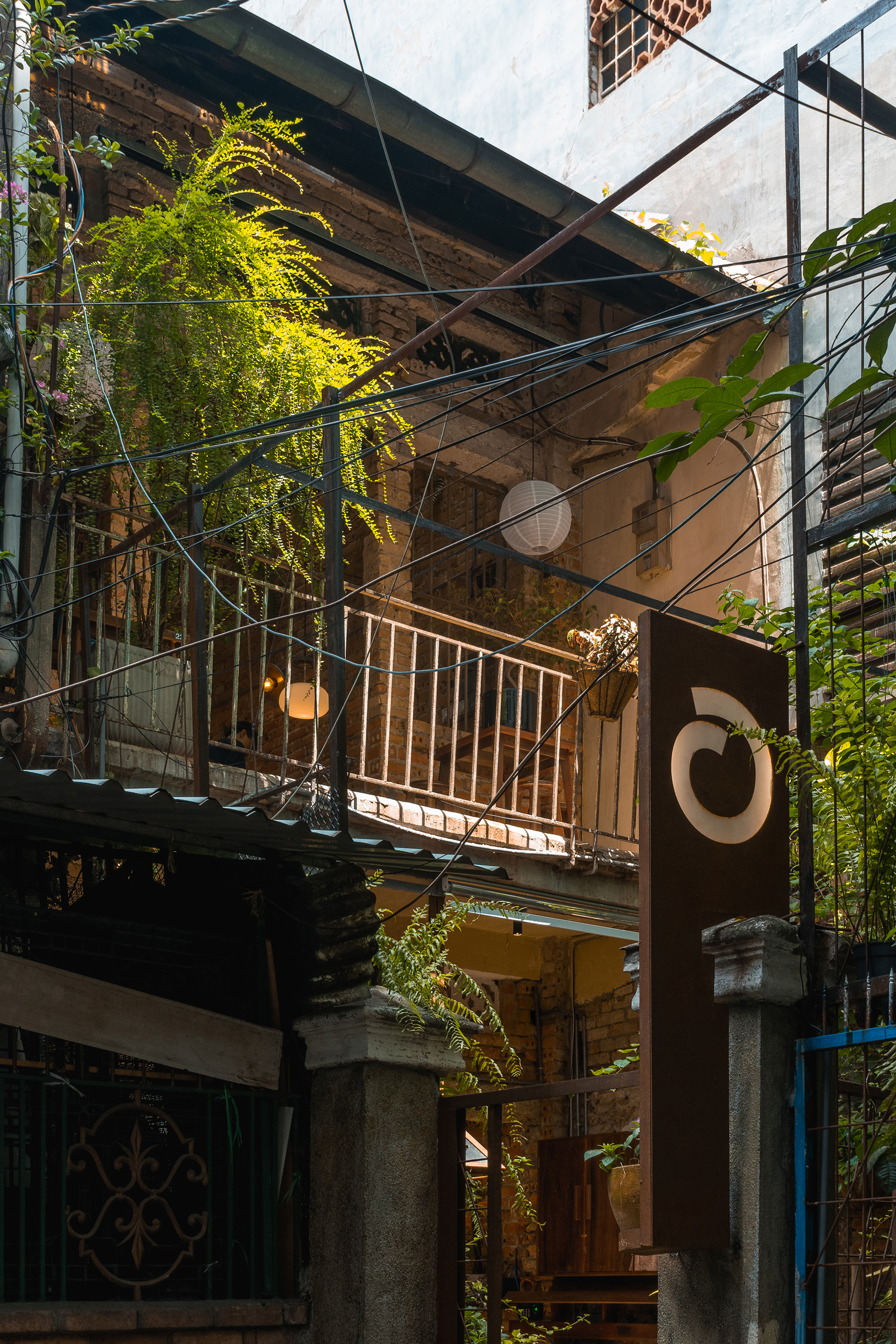
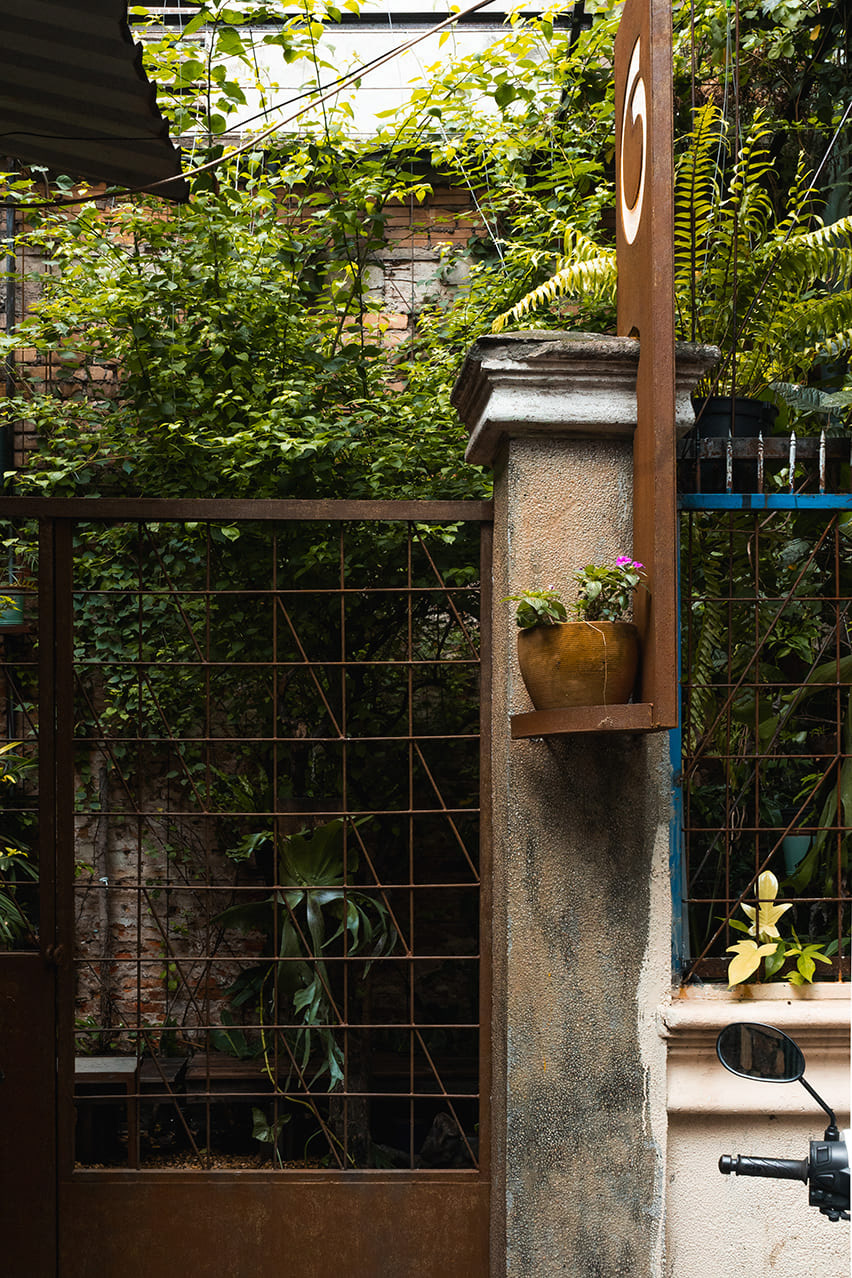
Nestled within the urban fabric, the market—with its simple, unpretentious appearance—establishes a clear dialogue with the surrounding modern office towers. Amid the city’s rapid pace of development, the market’s continued existence acts as an anchor of collective memory—a place where familiar spaces can still coexist with new movements, as long as community attachment is preserved.
Nestled within the urban fabric, the market—with its simple, unpretentious appearance—establishes a clear dialogue with the surrounding modern office towers. Amid the city’s rapid pace of development, the market’s continued existence acts as an anchor of collective memory—a place where familiar spaces can still coexist with new movements, as long as community attachment is preserved.
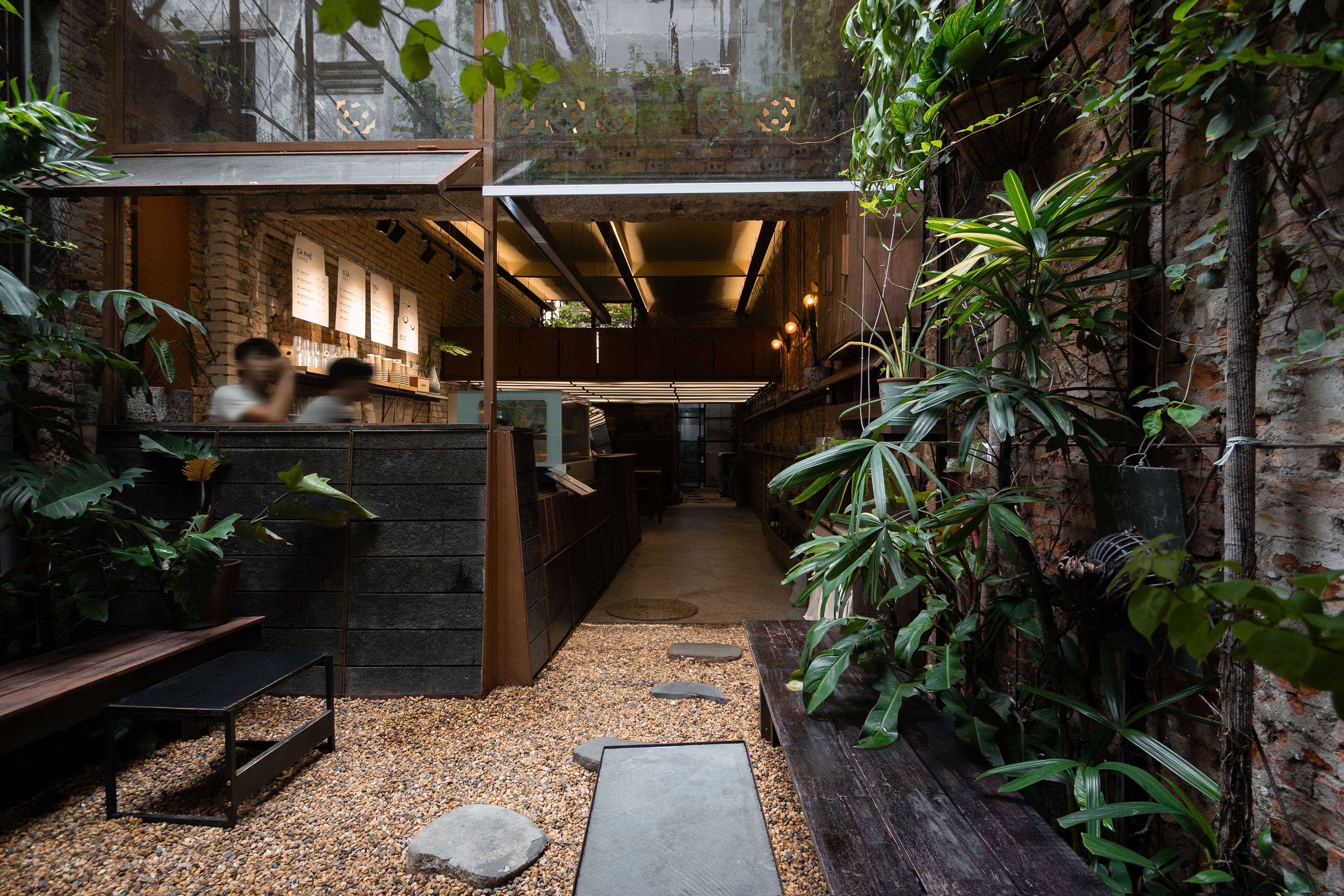
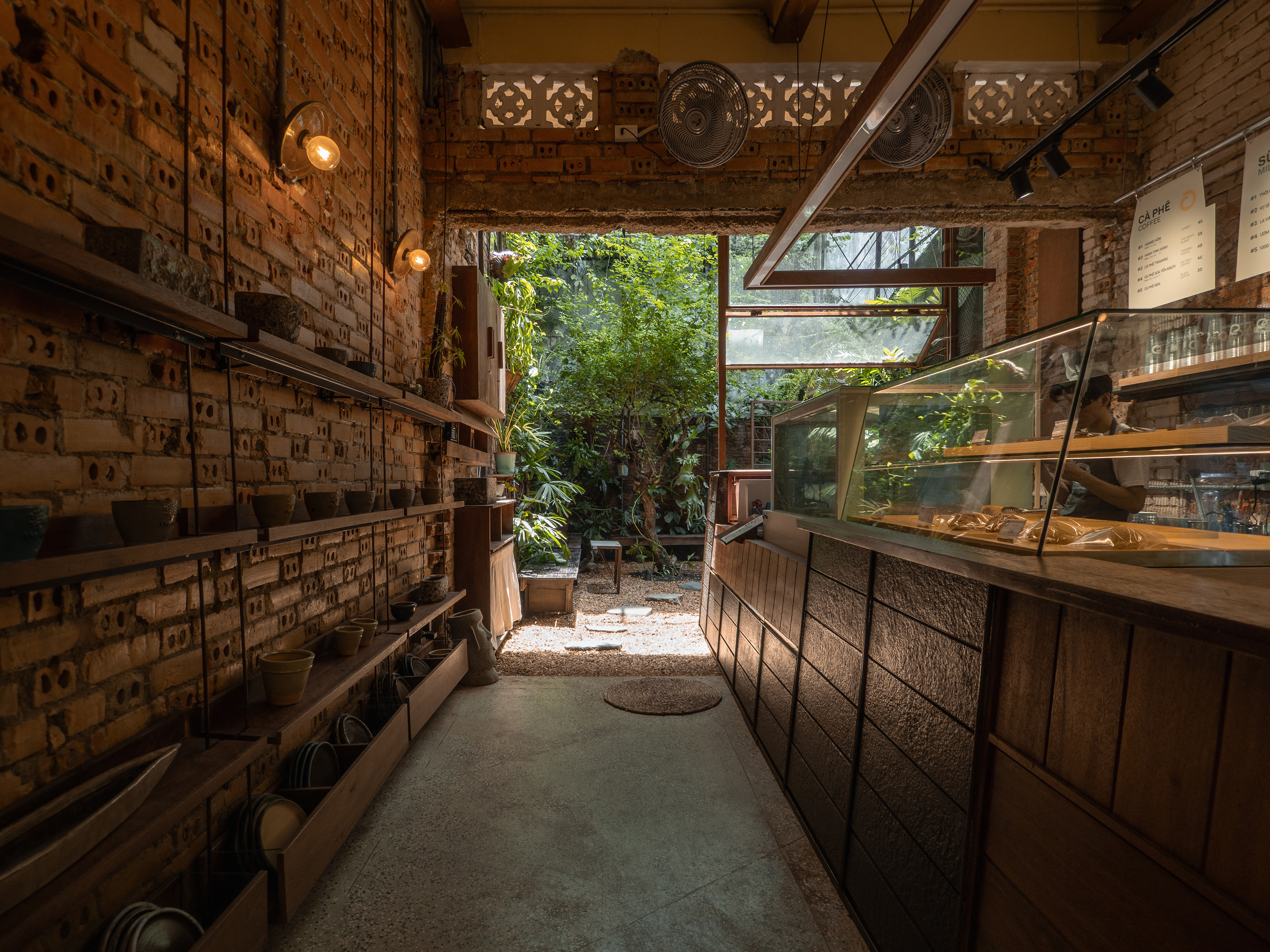
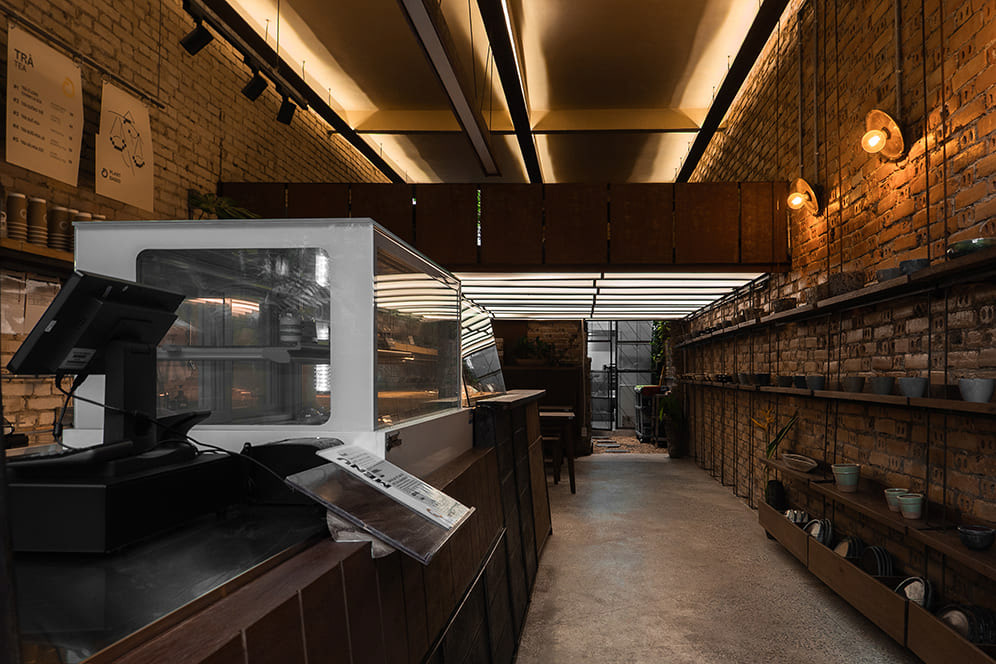
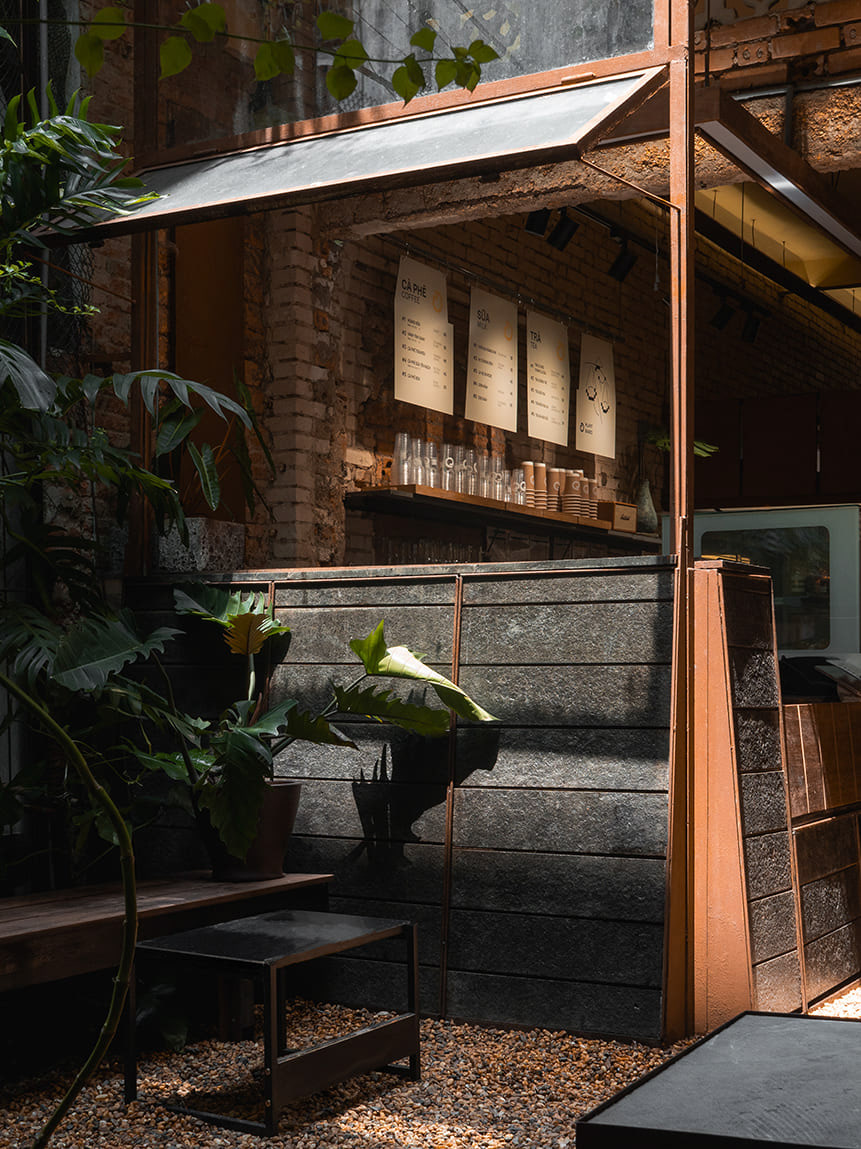
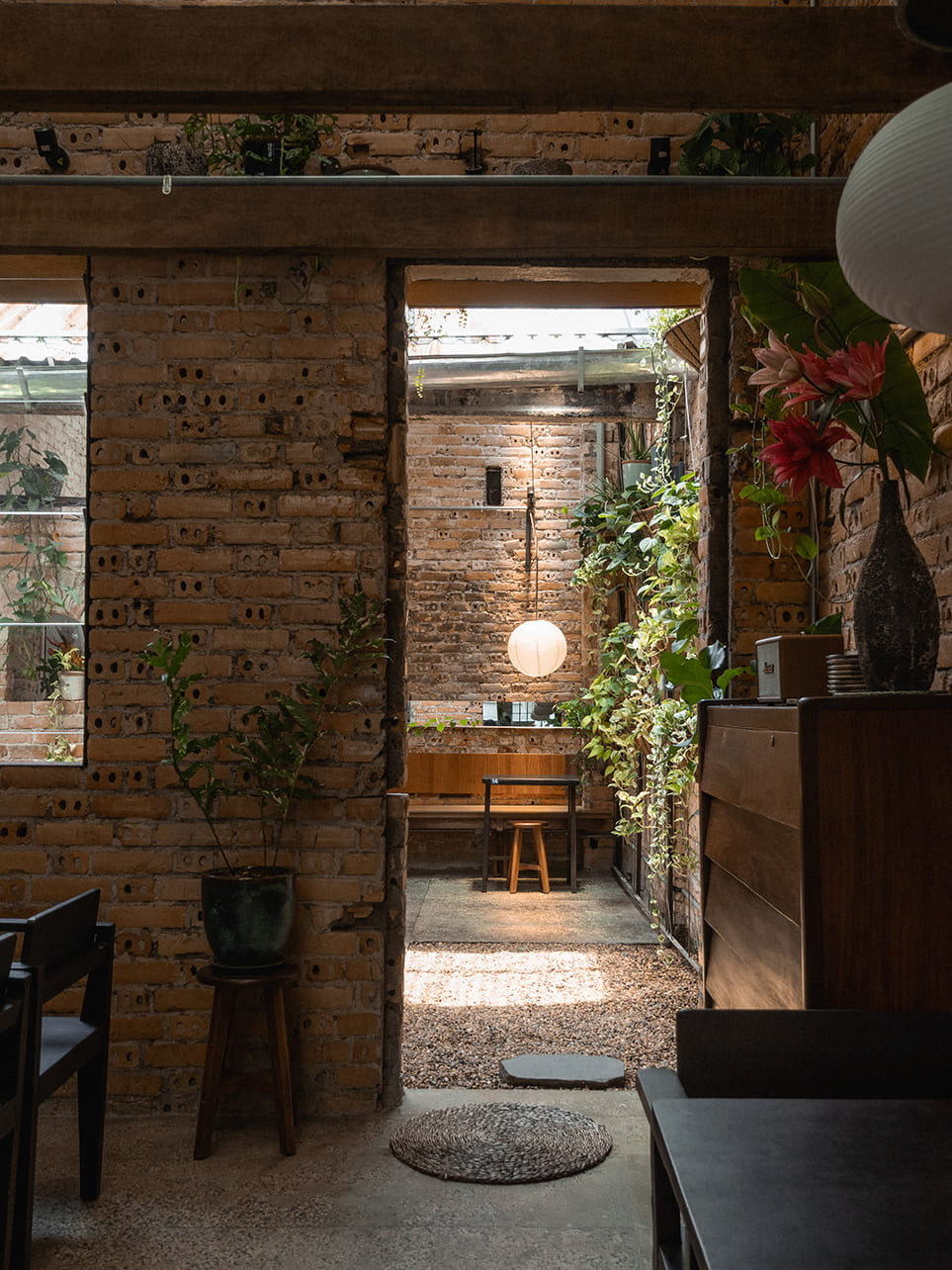
Within this context, the restaurant approaches the site as a cautious addition—not to assert itself, but to introduce a new rhythm into a place already rich in layers of use. The project draws from the inherent values of the existing house, transforming them into a renewed spatial experience aligned with contemporary operational needs.
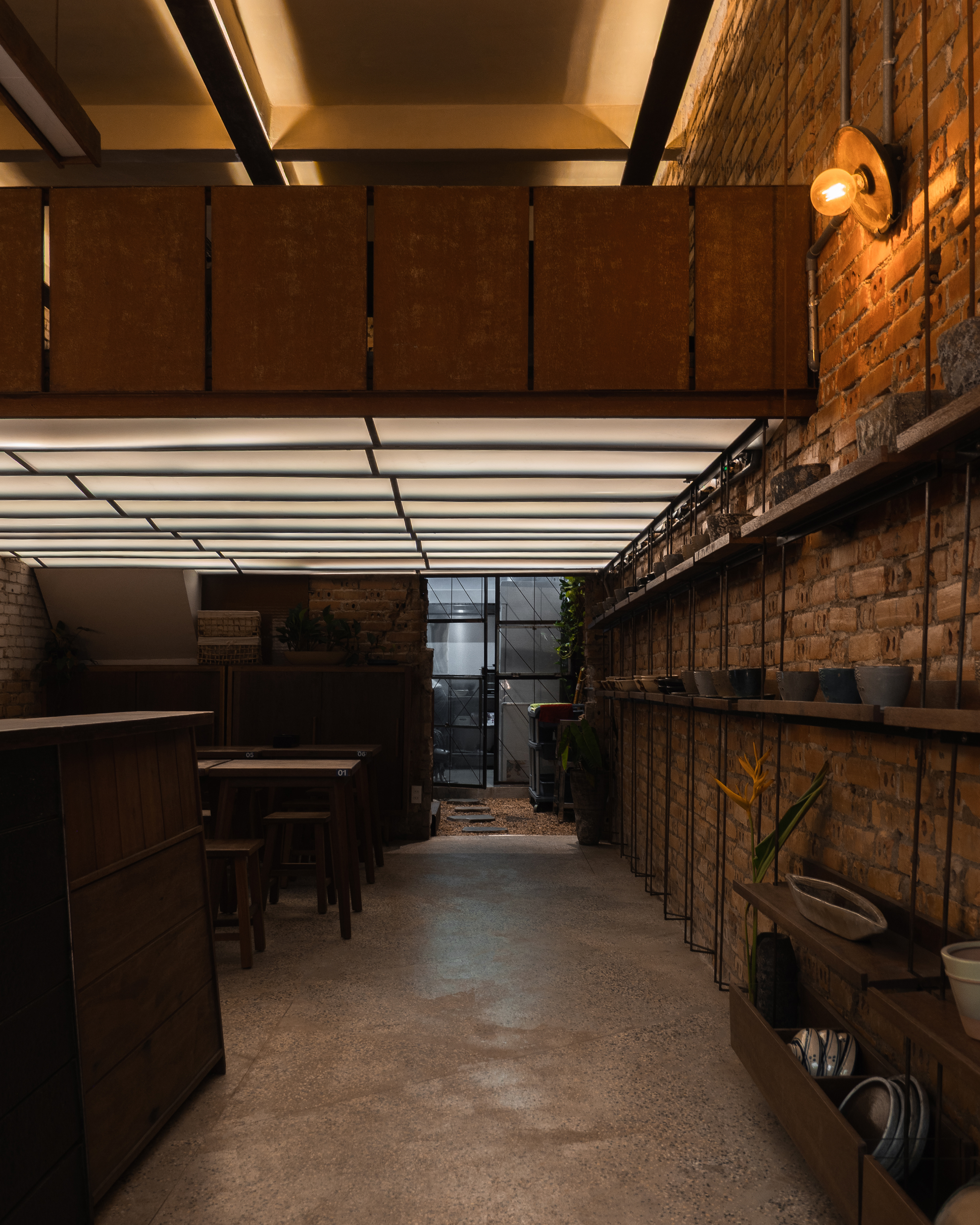
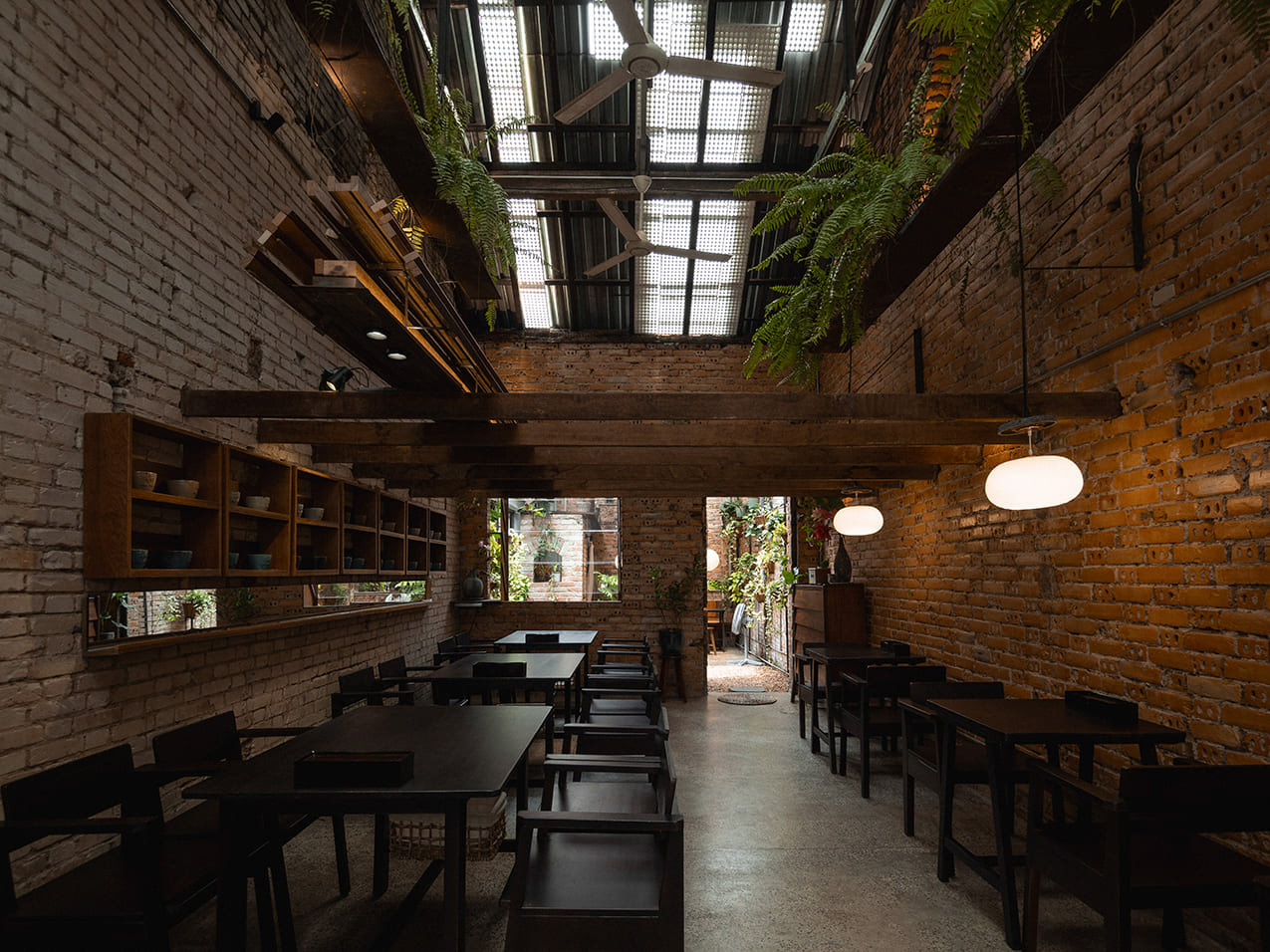
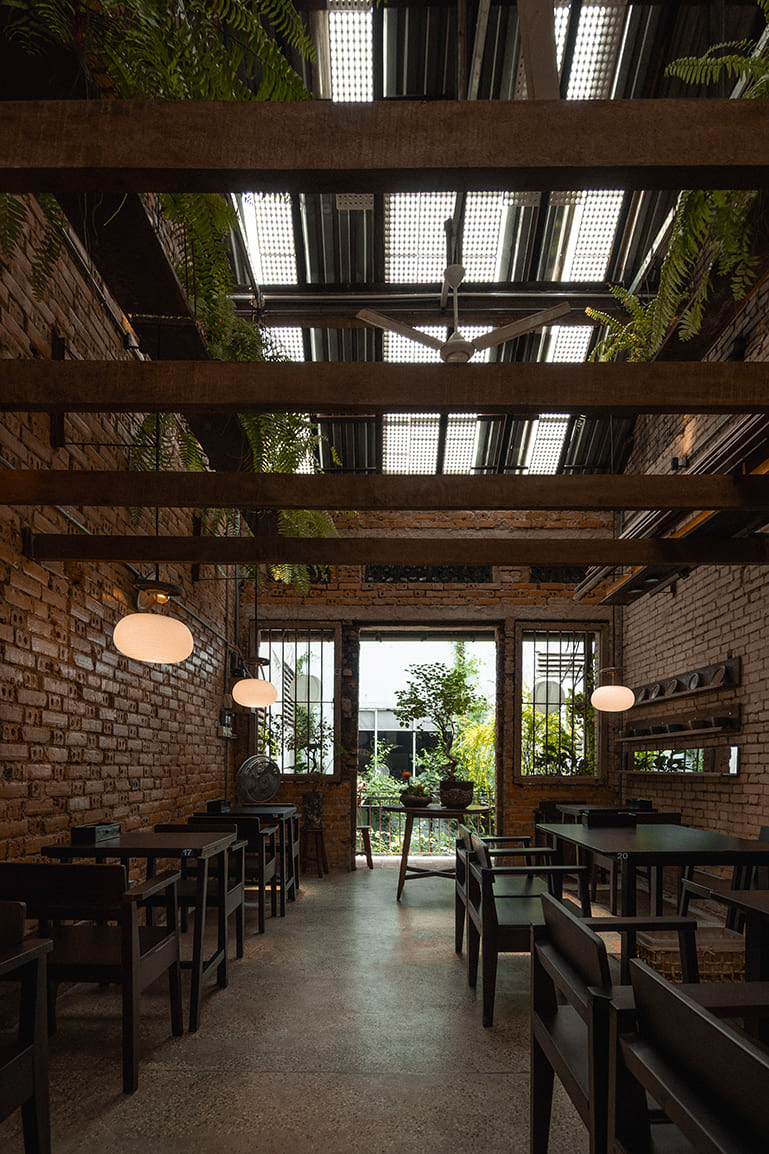
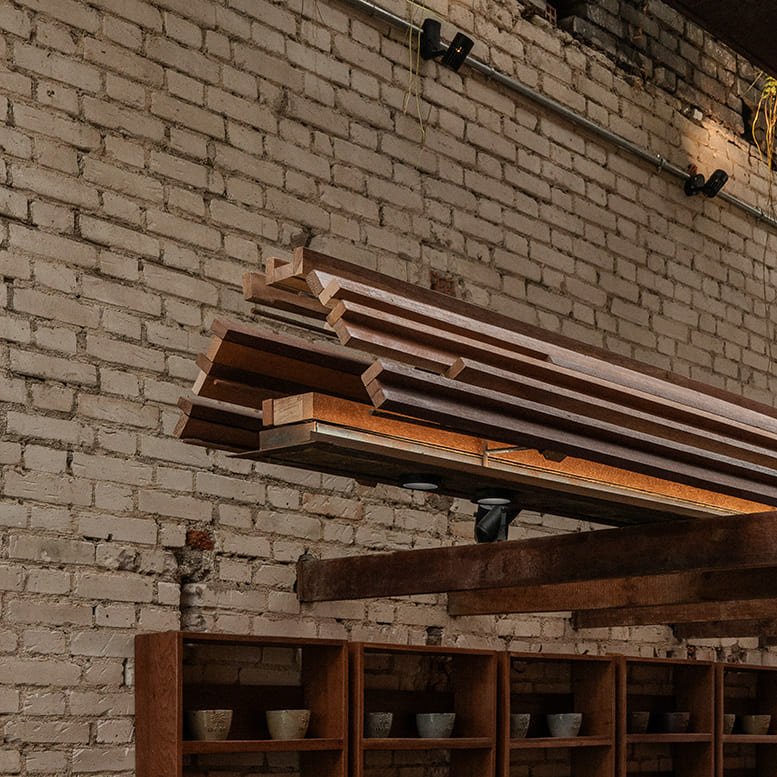
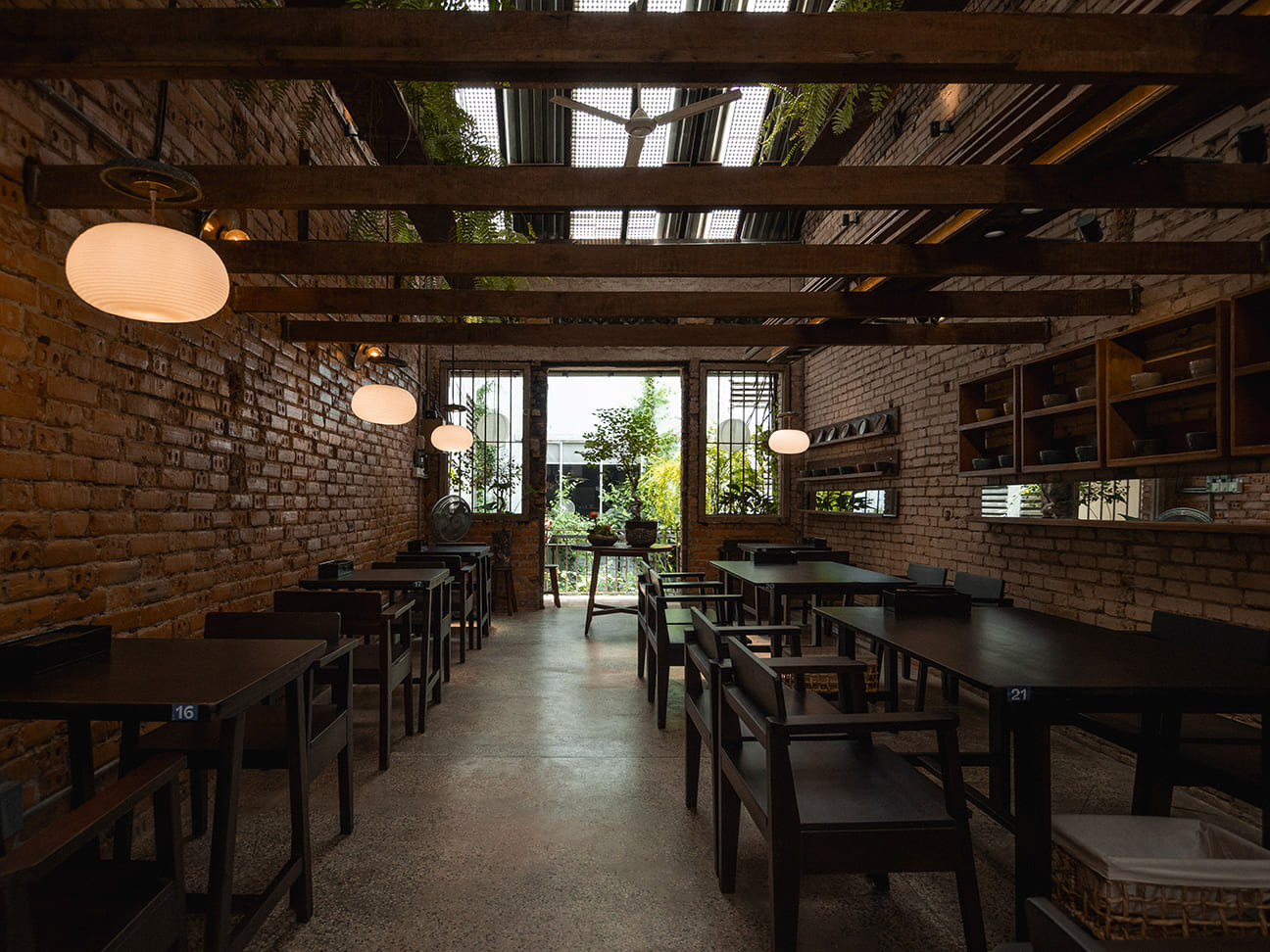
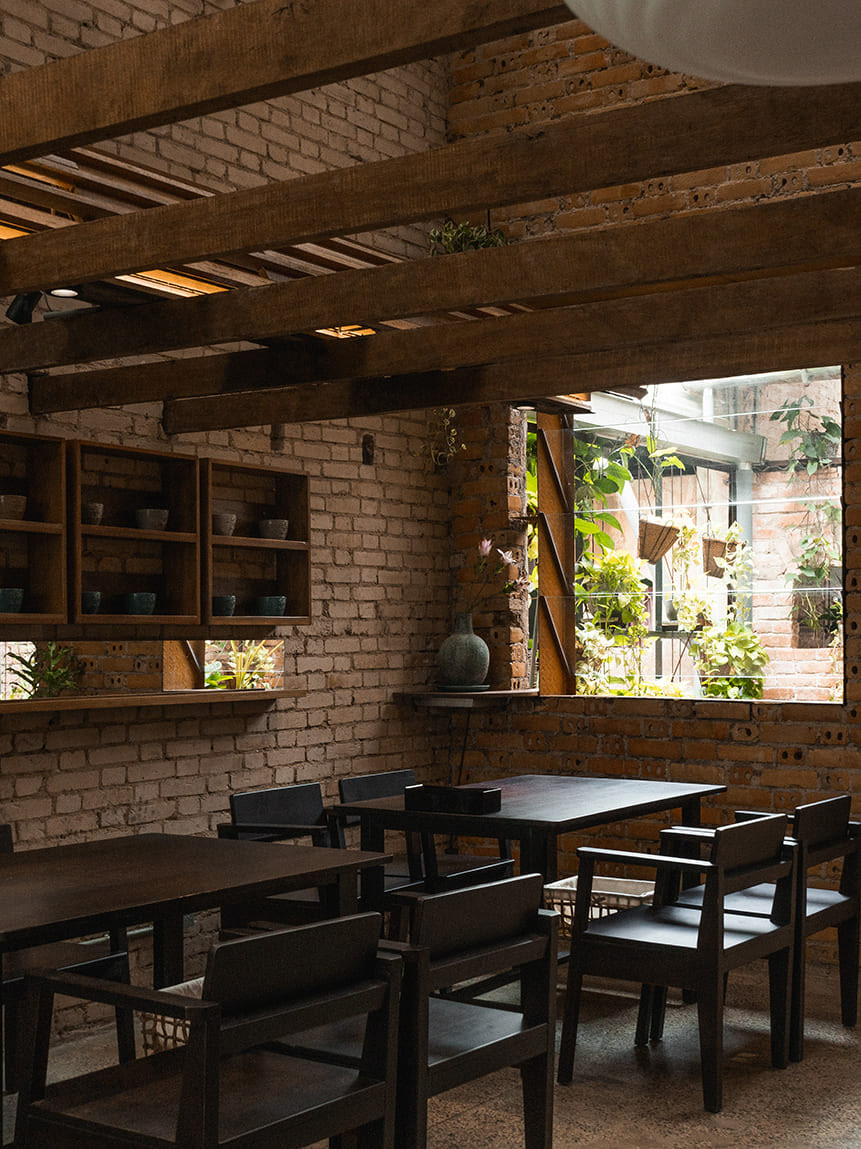
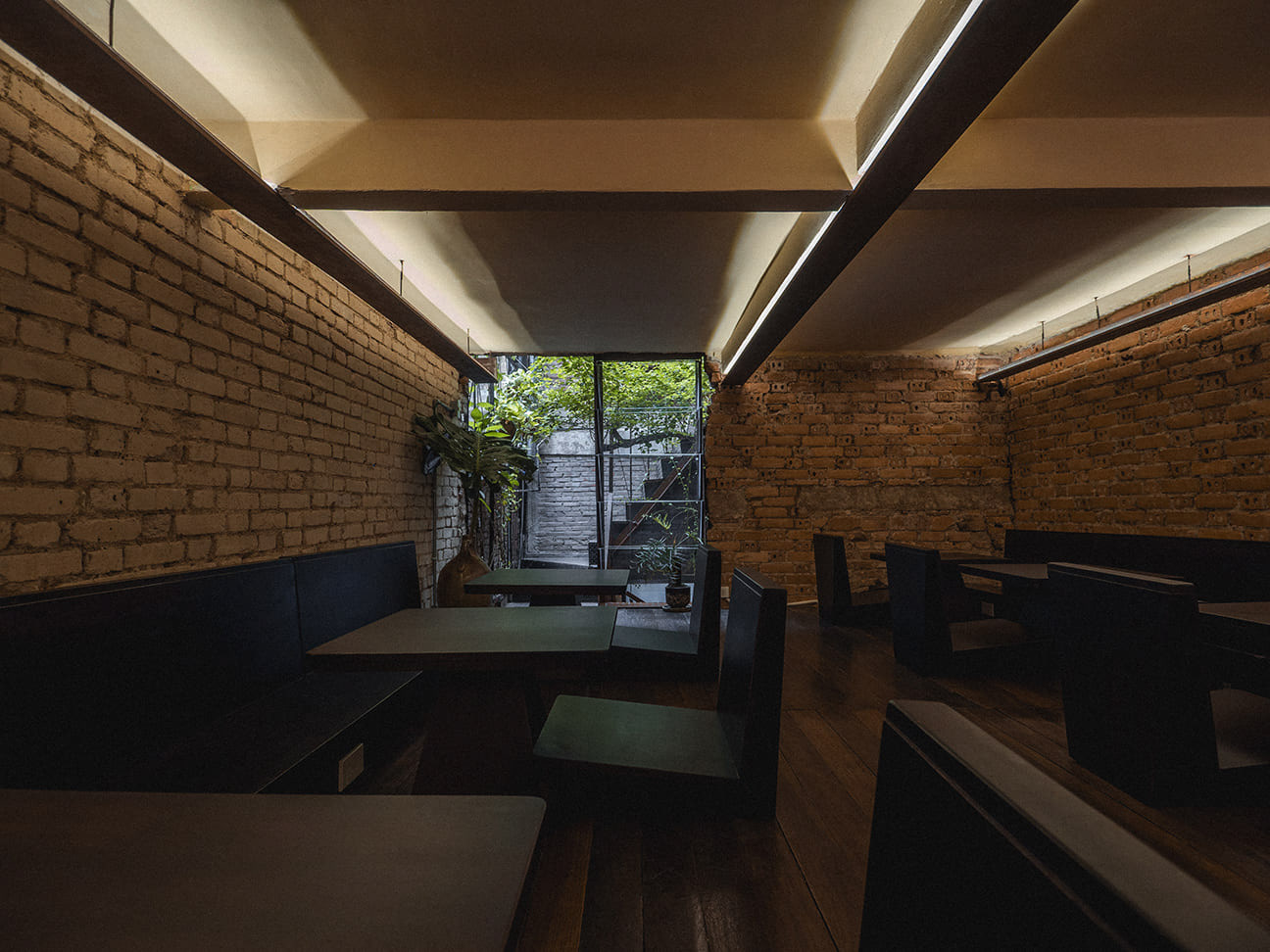
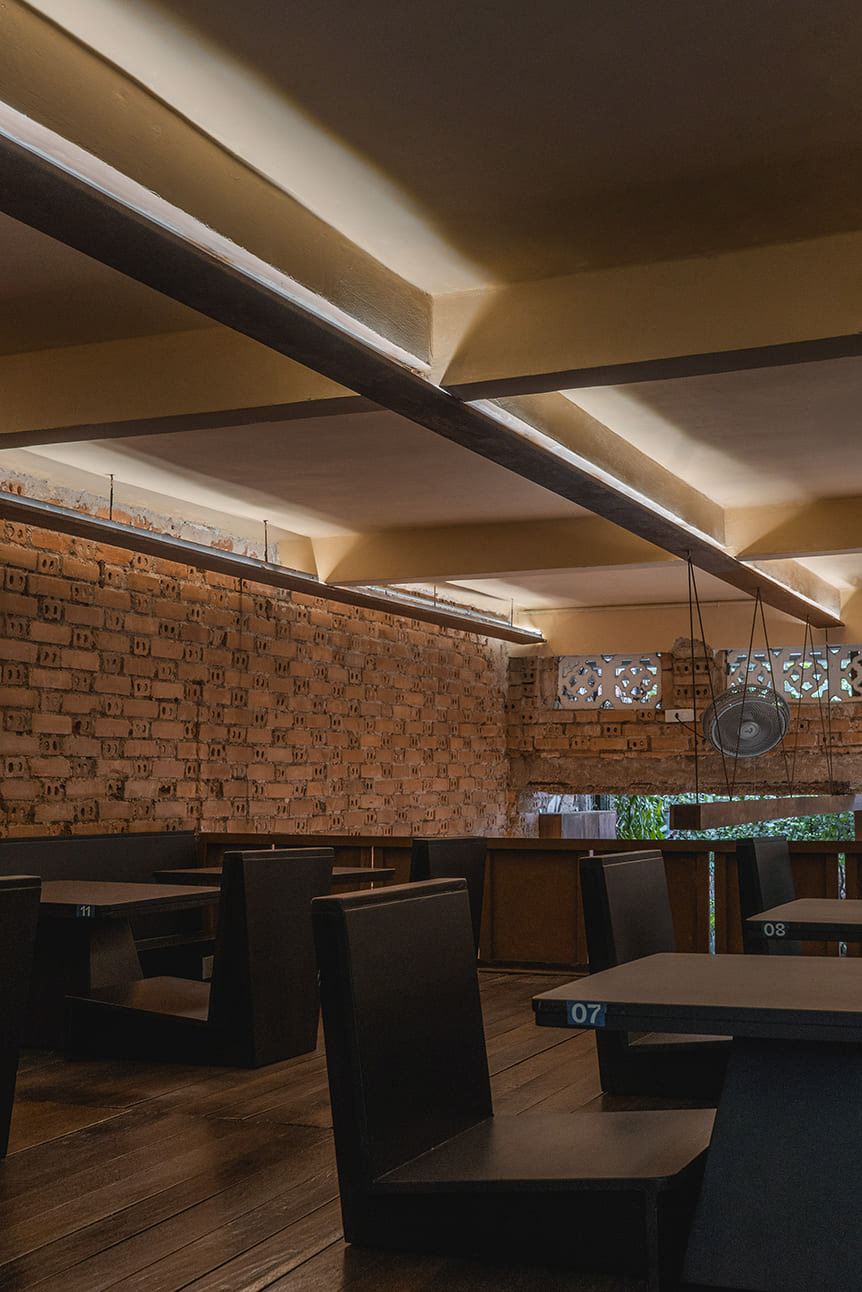
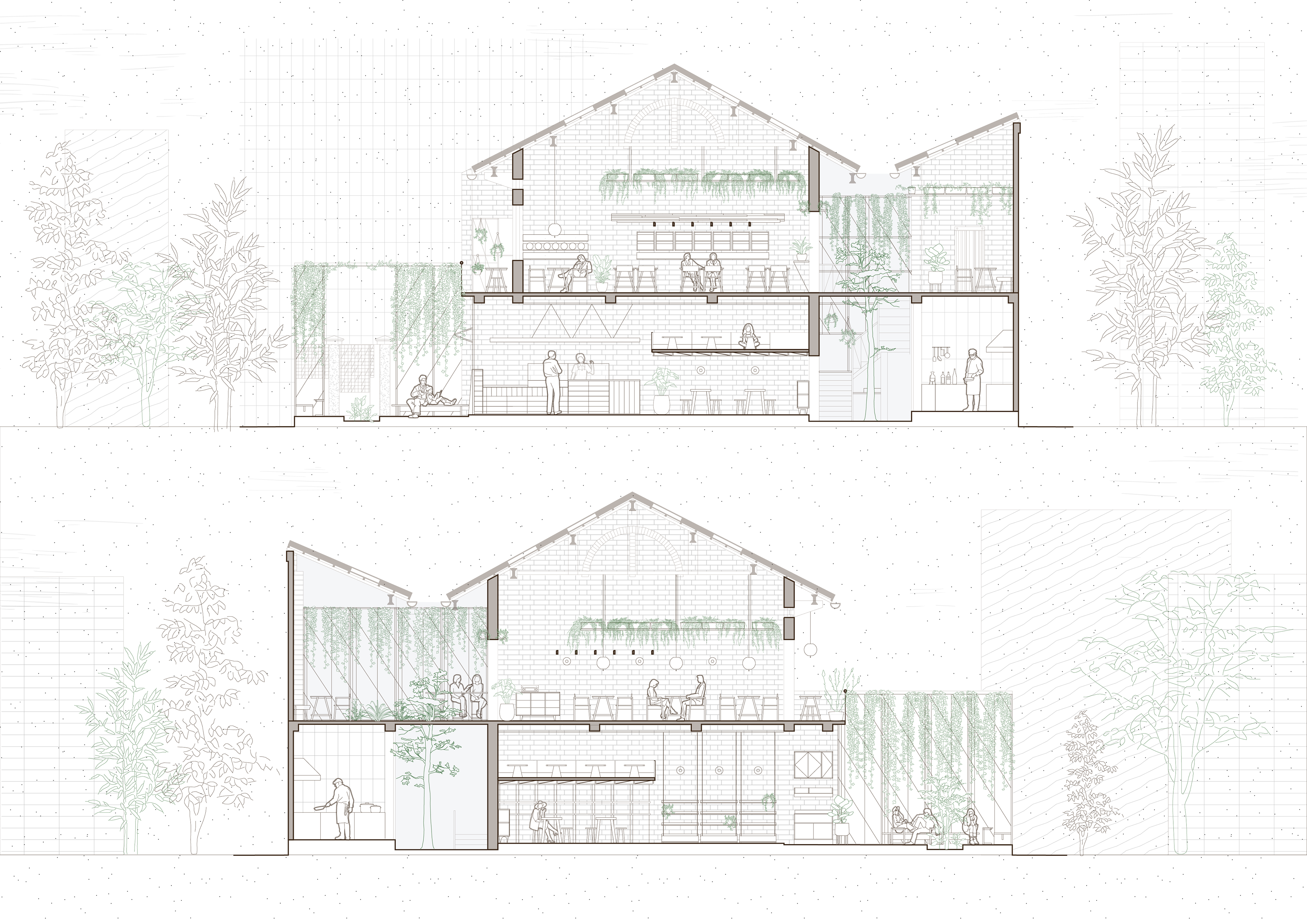
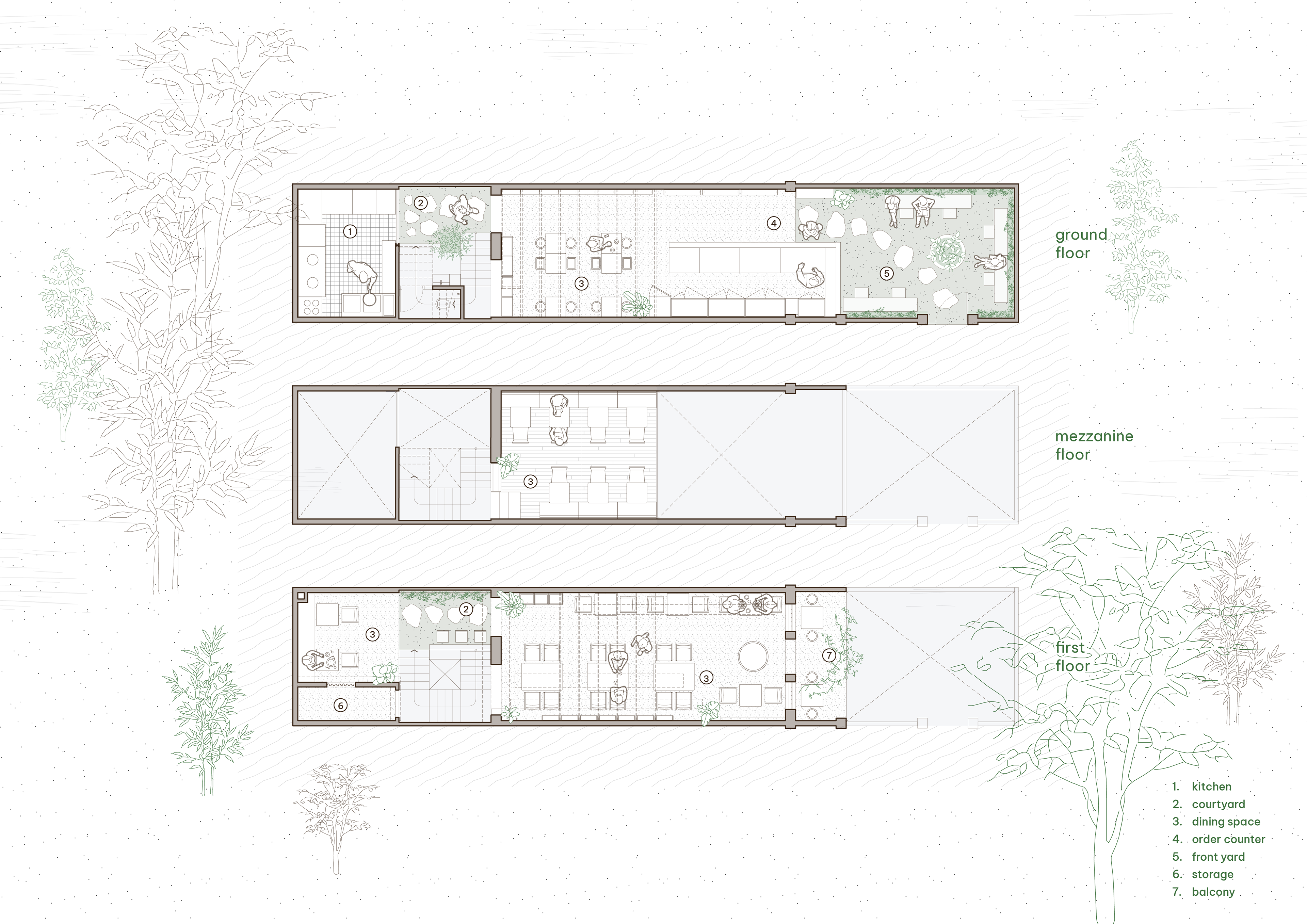
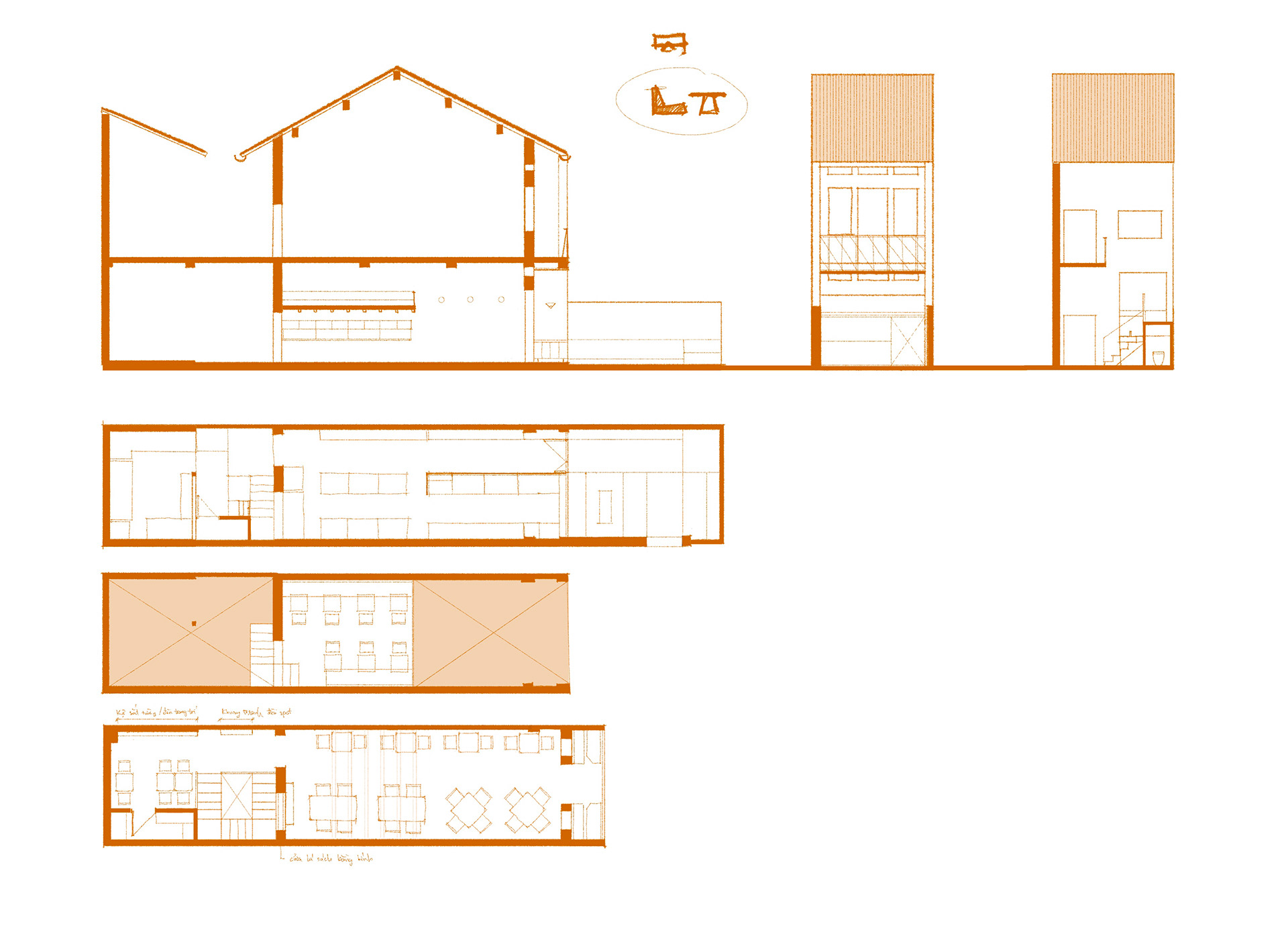
The ground floor retains the wooden beam system—a characteristic architectural element of traditional Chinese houses—and is used as a low-ceiling dining space. This spatial organization fosters a sense of intimacy, evoking traditional modes of living: low communal tables, a close-knit atmosphere, and shared meals.
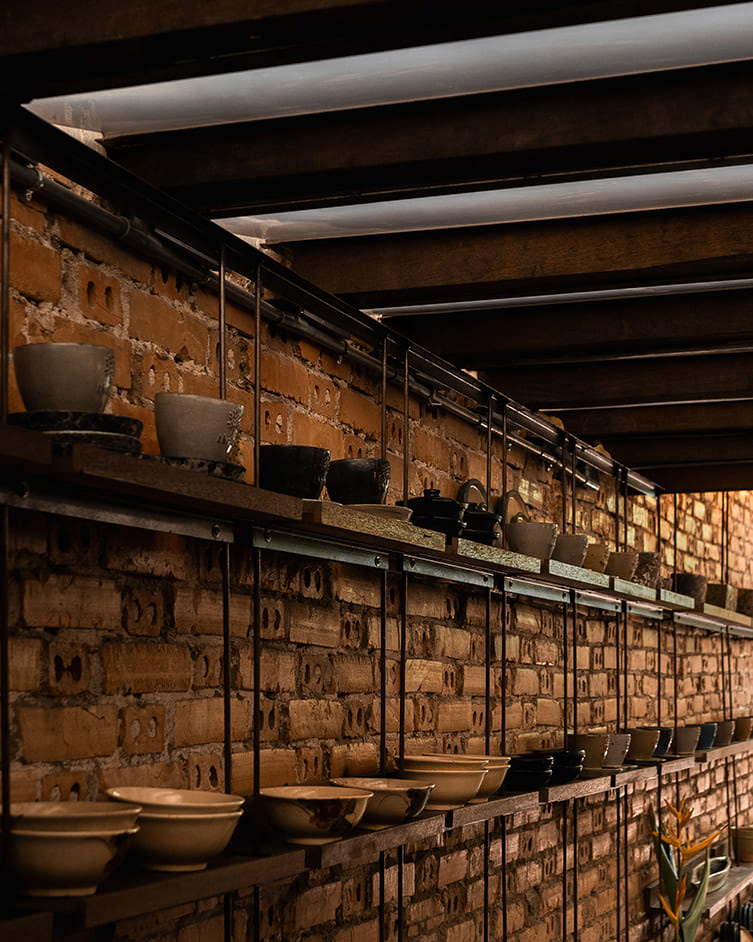
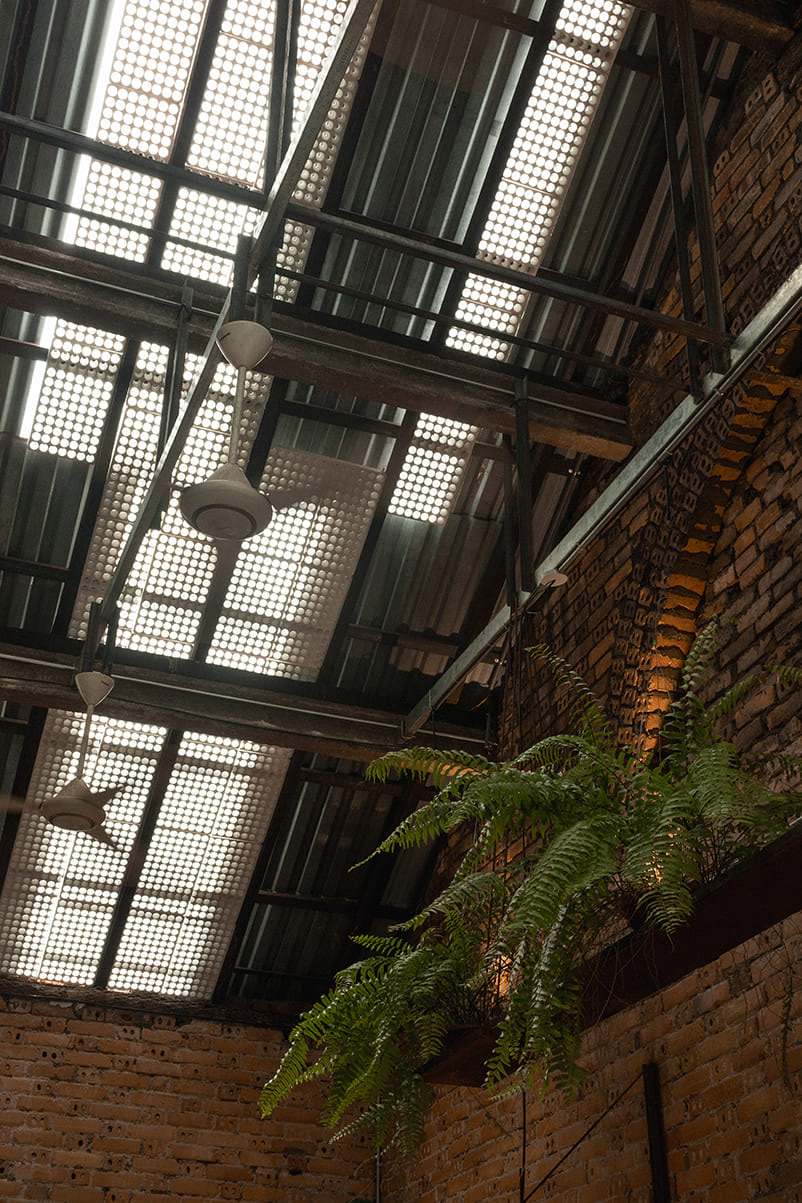
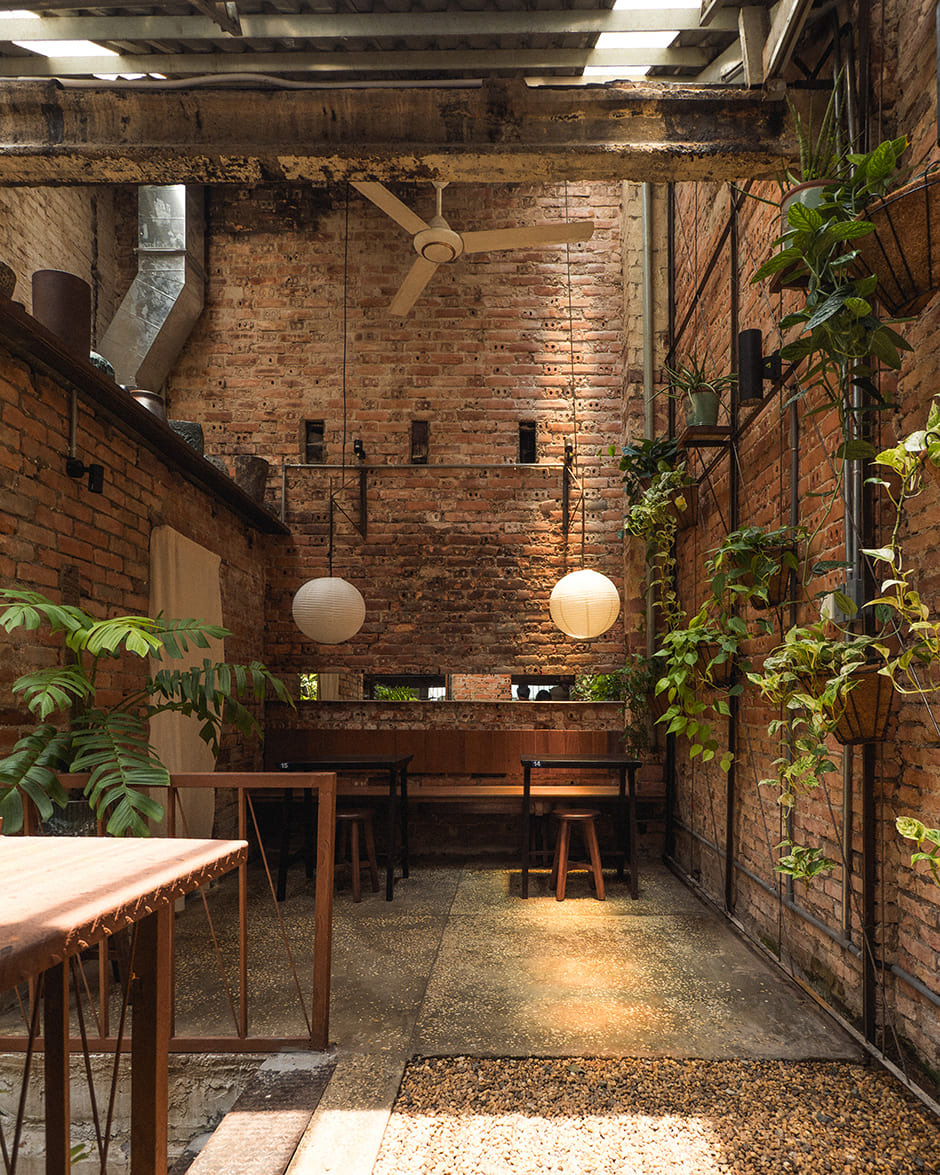
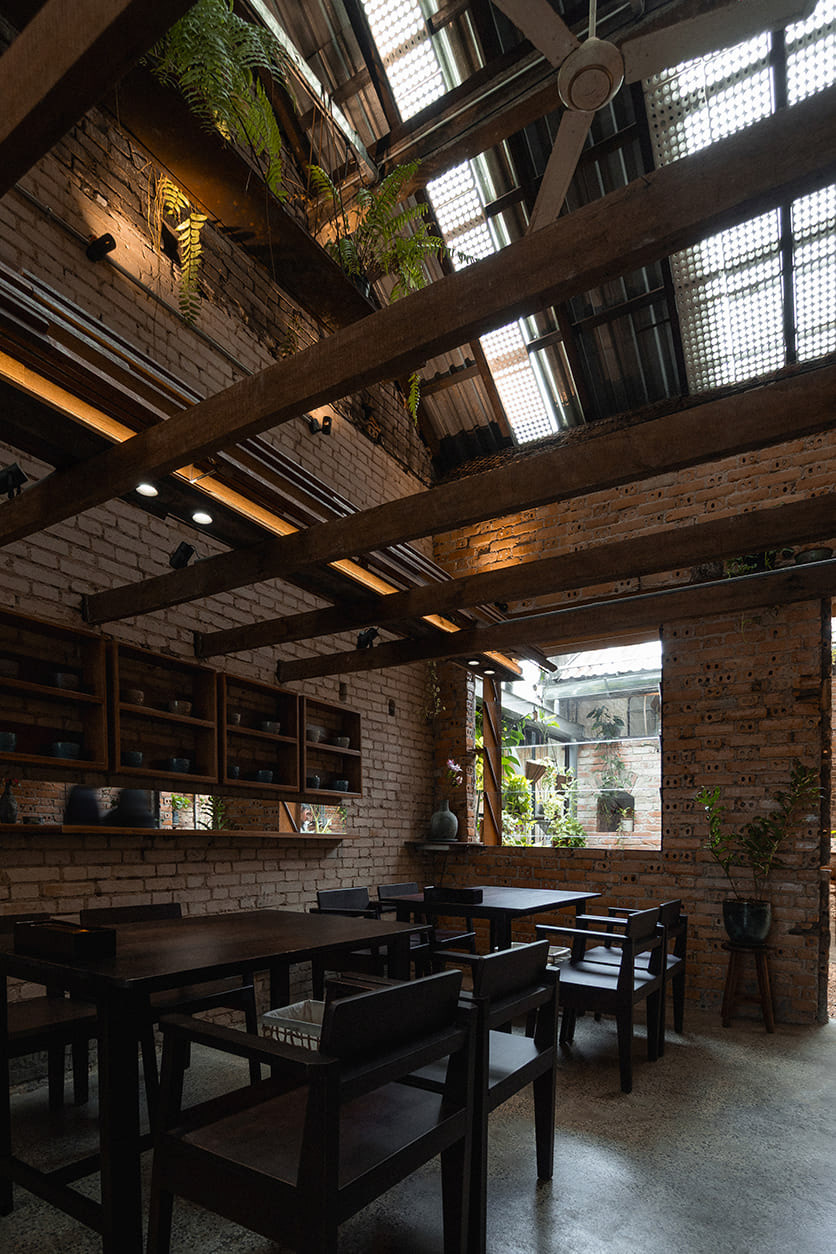
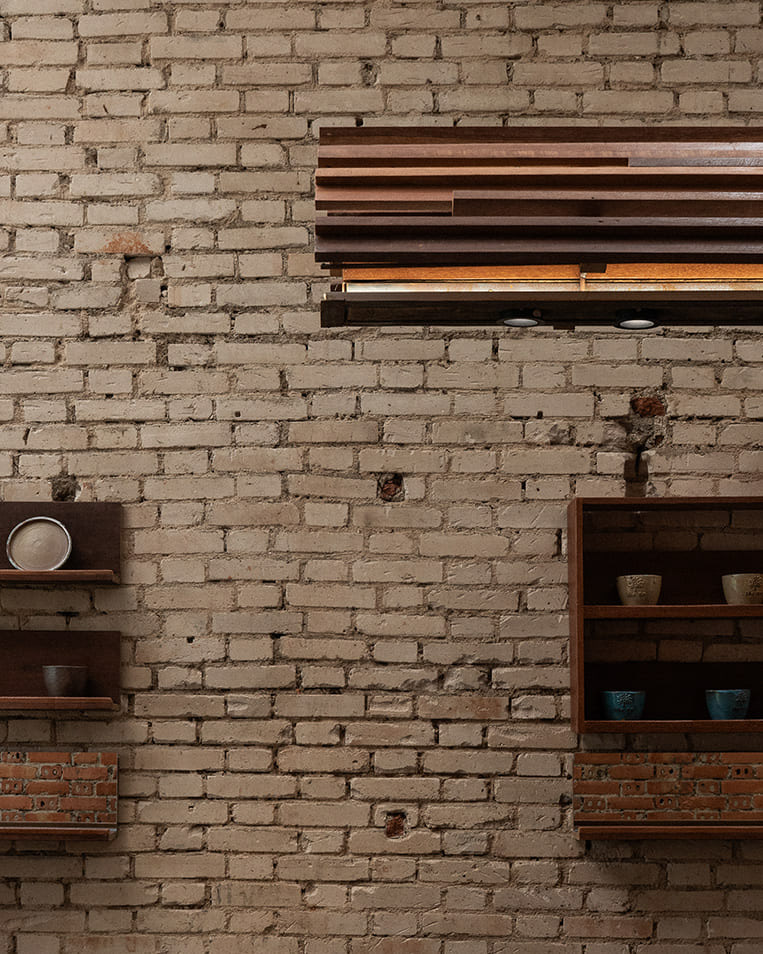
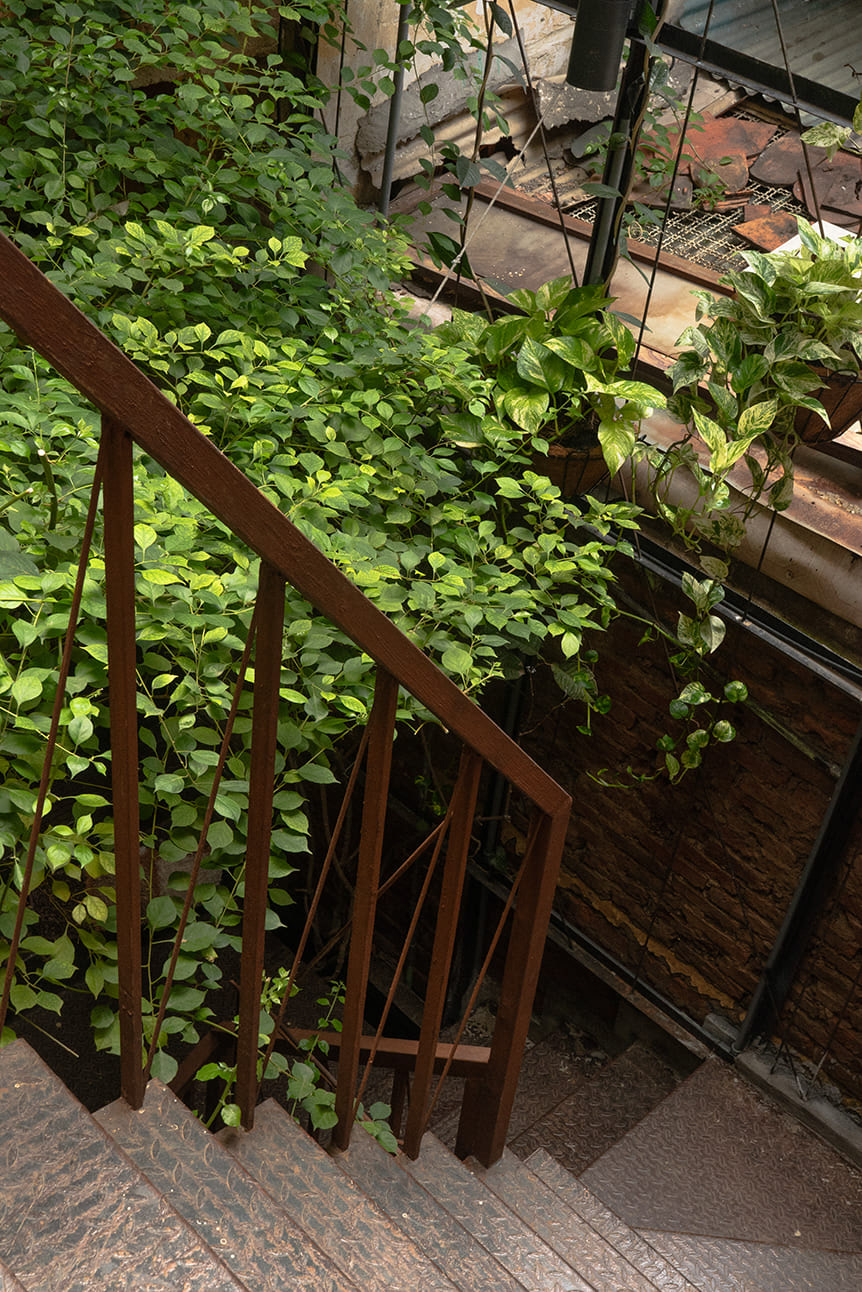
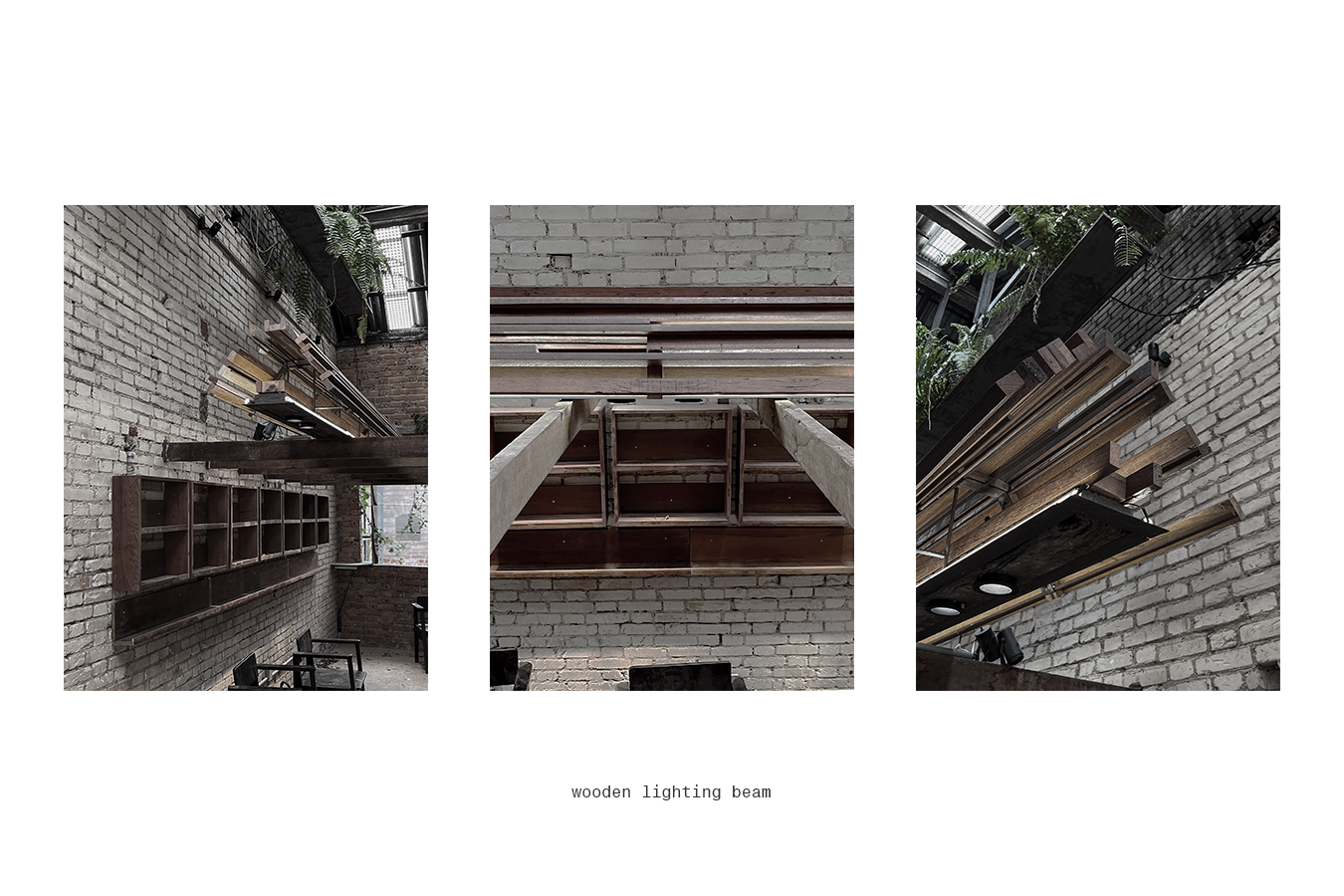
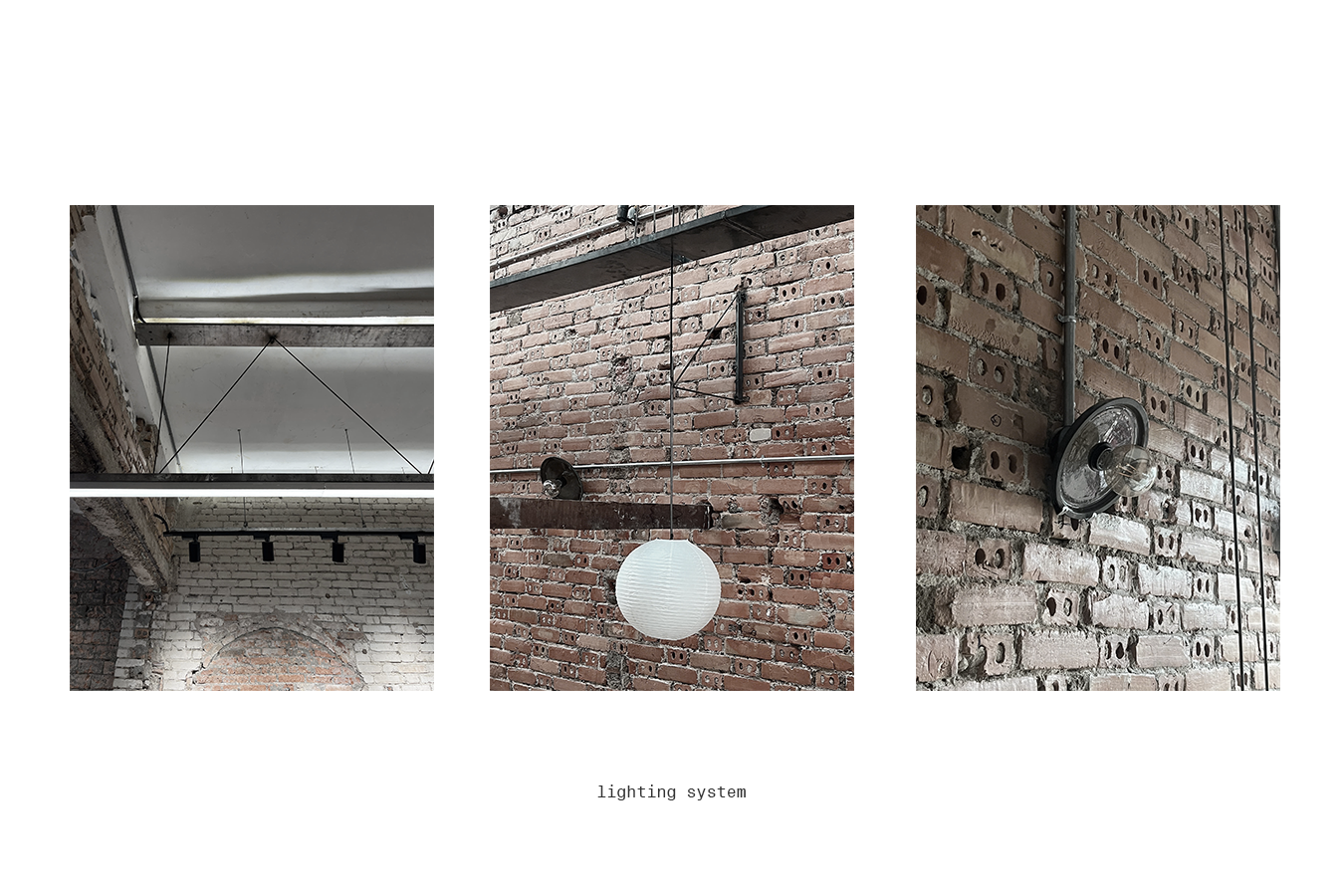
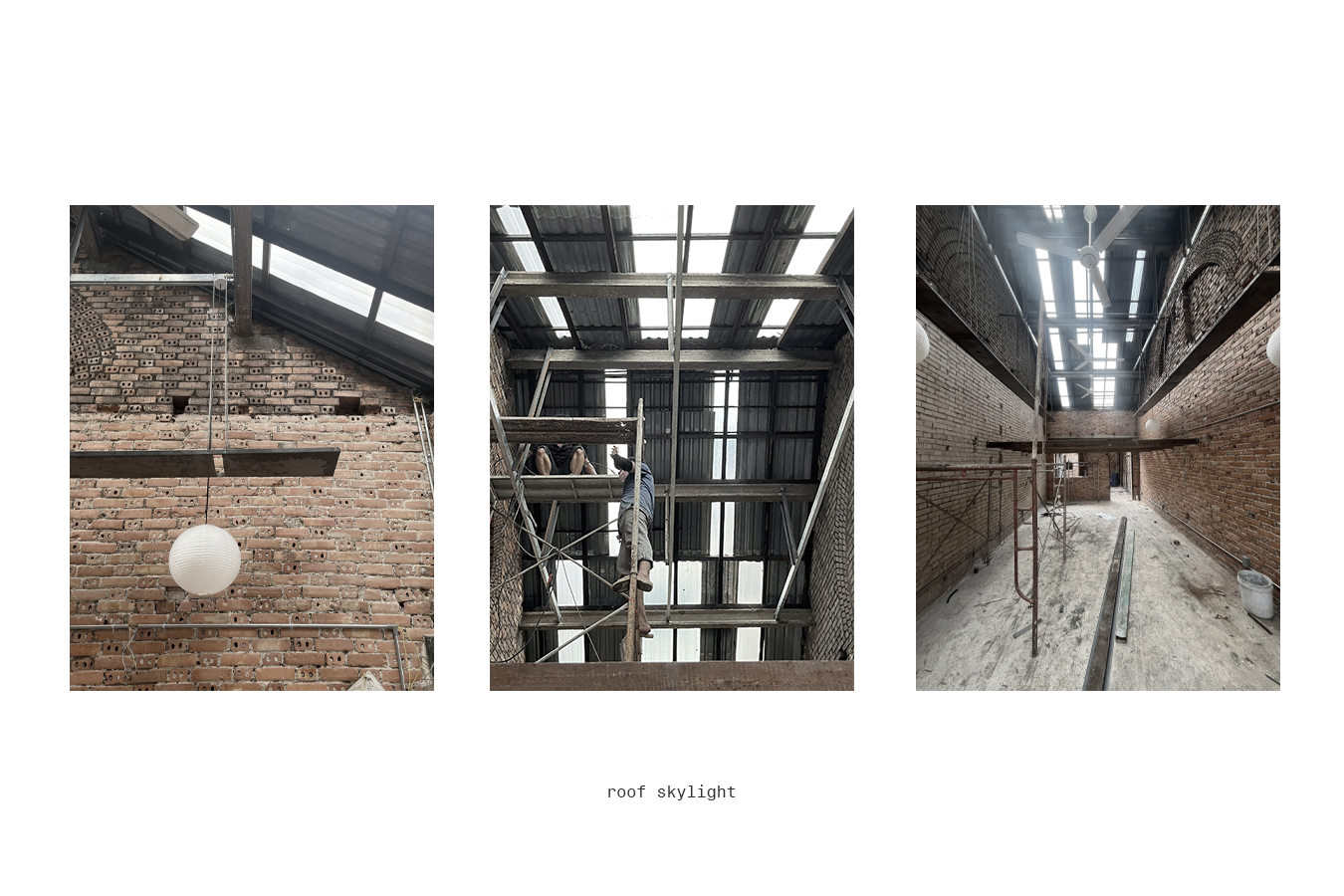
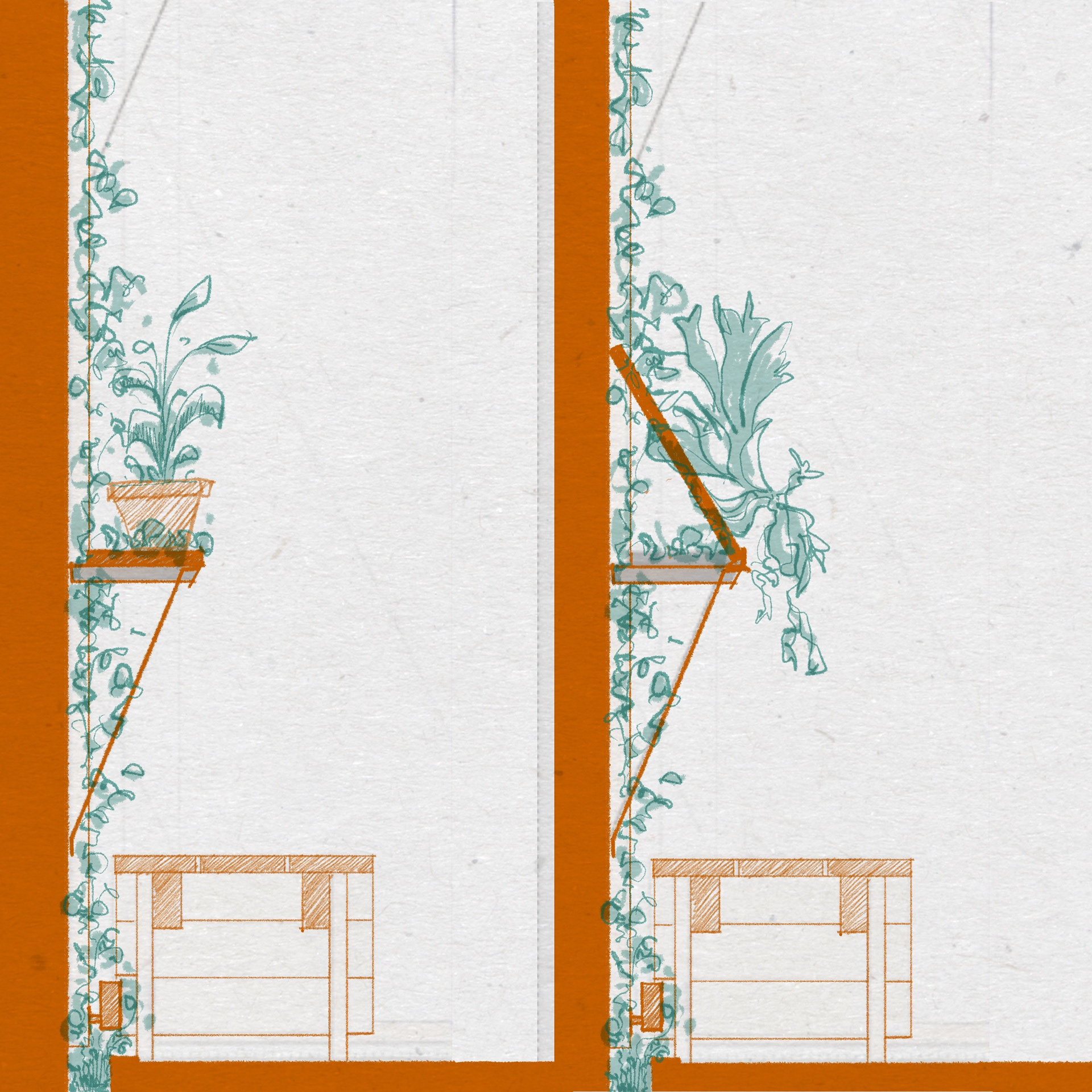
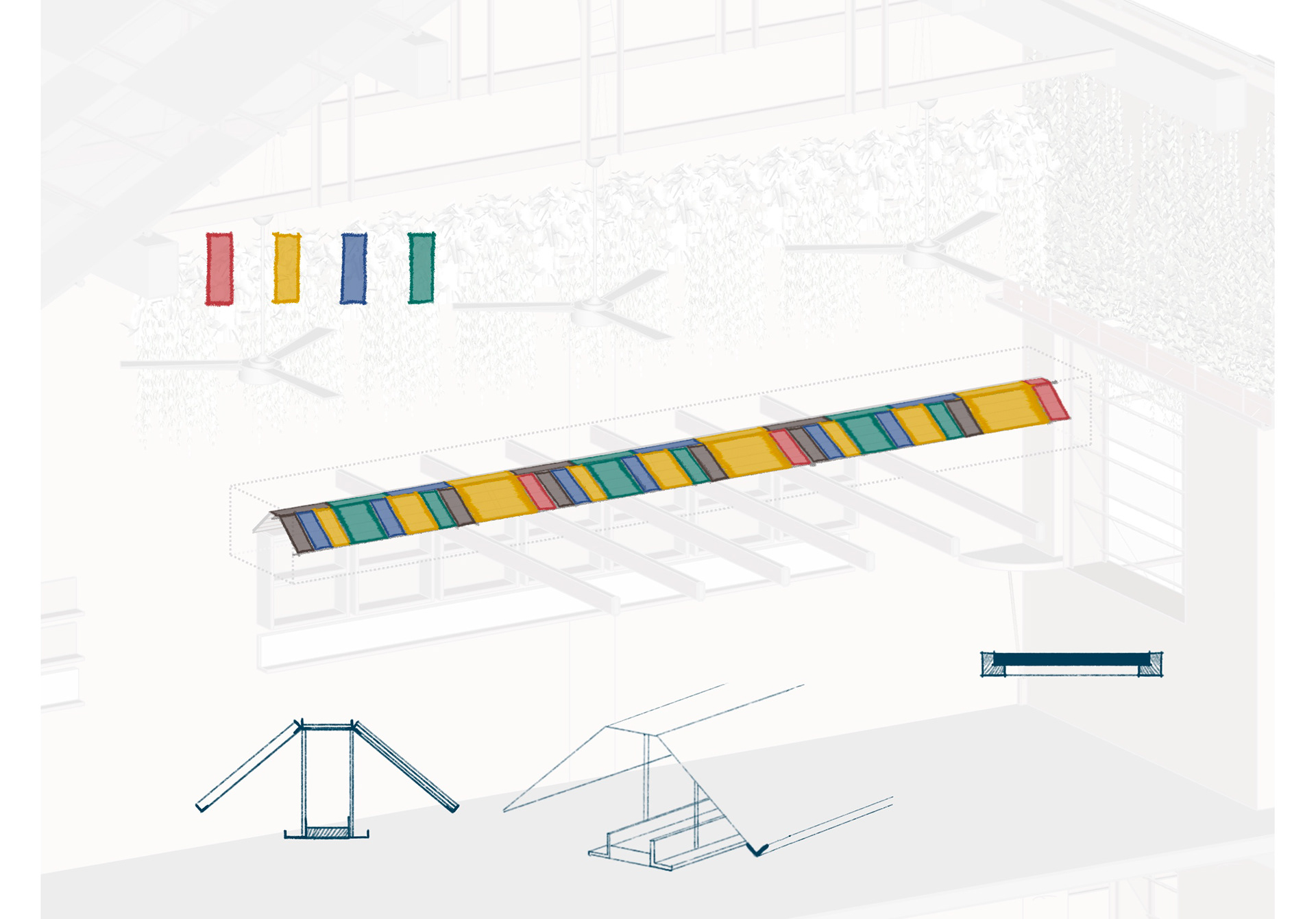
The upper level offers a gentle contrast: a tall, airy space where the original roof structure is preserved almost intact. Natural light is introduced through lightweight materials such as mesh, planted foam panels, and carefully calibrated lighting solutions. Overscaled lighting fixtures are positioned in dialogue with the existing wooden structure, creating a space that is sufficiently enclosed for dining while simultaneously defining an interior rhythm that remains connected to the overall architectural composition.
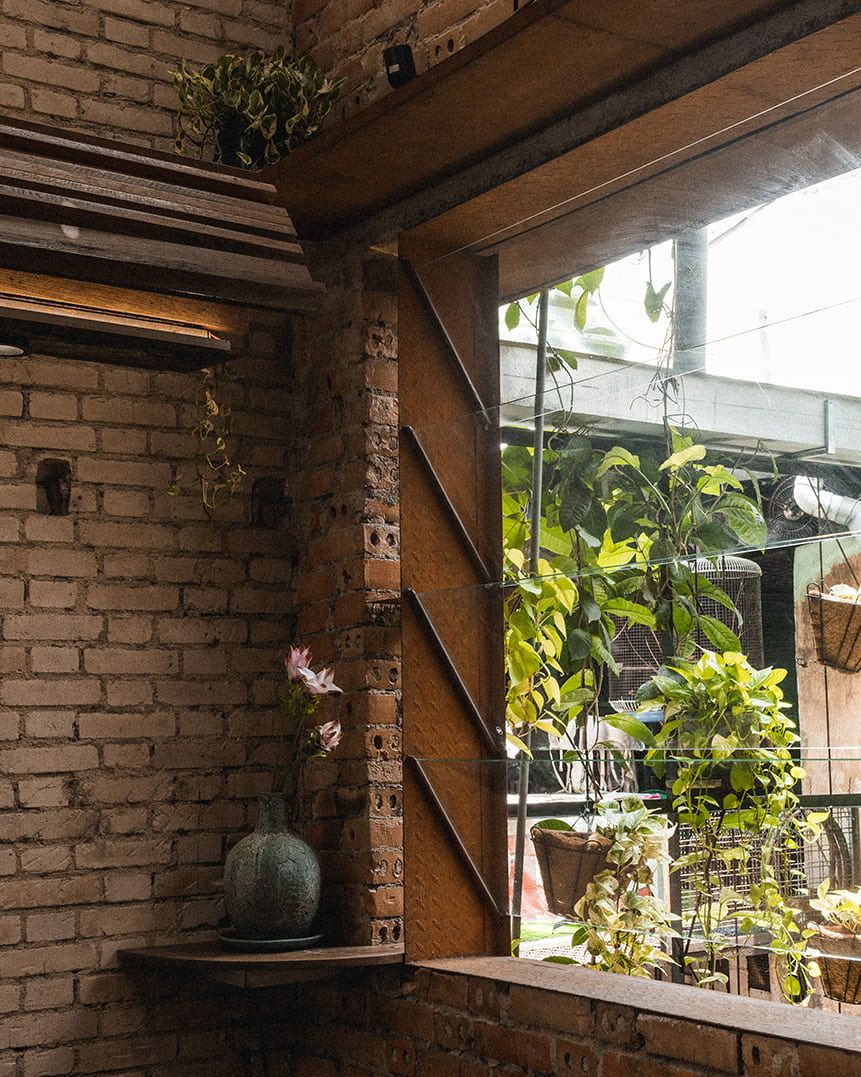
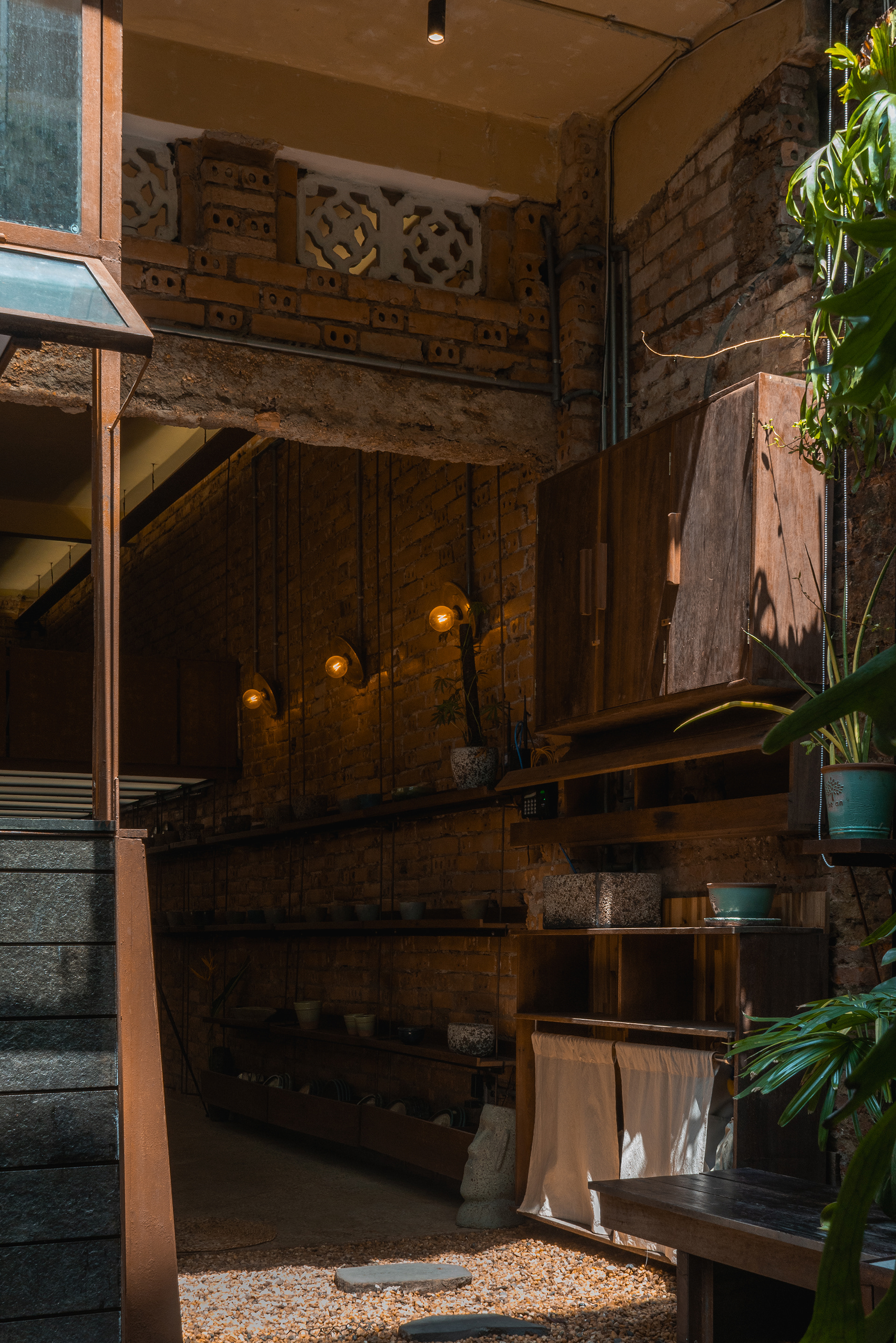
The project as a whole is guided by a spirit of preservation, restraint, and coexistence. The new does not negate the old; instead, it seeks to clarify and rearticulate its values through a more contemporary, lighter design language. The transitions between spatial layers, materials, and functions are the result of deliberate adjustments—allowing the building not only to settle naturally into its urban context, but also to continue the stories that began long before it.